
Media Release
The Bus Industry Confederation (BIC) has welcomed the Office of Transport Safety Investigations (OTSI) report into the 2023 Greta bus accident. However, BIC says too many of its recommendations echo reforms industry has already put to government and is concerned that much of the burden will fall on bus and coach operators.
Ten people lost their lives and twenty-five were injured when the coach rolled over at Greta. The driver was under the influence of the prescription opioid tramadol. “There is nothing we can do to change the past, but if key decision makers start listening, we can prevent catastrophic situations in the future” said BIC CEO, Varenya Mohan-Ram.
BIC’s 2023 position paper, Bus Safety Initiatives, called for a national seatbelt education campaign, stronger driver background checks and a review of seatbelt rules for buses. Since then, governments have rejected improved seatbelt signage and shelved work on anti-ejection glazing and emergency exits after a rollover.
“We need nationally harmonised regulation, mandatory reporting, an independent licensing authority, seatbelt safety education and improved drug and alcohol testing at a minimum,” said Mr. Mohan-Ram.
Nationally harmonised regulation and mandatory reporting
Only some states and territories require health professionals to report drivers who may be unfit to drive and the rules vary. BIC wants government to lead nationally harmonised mandatory reporting of health conditions by drivers, health practitioners, and operators.
Independent licensing authority
BIC calls for the establishment of an independent national heavy vehicle licencing authority that manages both driver licences and passenger-vehicle accreditation.
Better drug and alcohol testing
OTSI asks operators to manage medications that fall outside the Australian Standard for workplace drug testing (AS/NZS 4308). BIC says the standard should be reviewed.
“If the Australian Standards for drug and alcohol testing do not keep our roads safe, they must be changed. The government and the regulators must be responsible for making this change,” said Mr. Mohan-Ram.
“Employers can’t be held solely responsible for the impairment of safety-critical workers who have been prescribed or dispensed medicine. The roles of medical practitioners, pharmacists, employees, regulators and operators must all form part of the solution.”
Seatbelt safety
In the Greta accident none of the ten passengers who died were wearing a seatbelt.
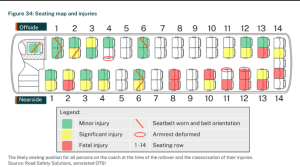
Bus safety investigation report – Rollover of coach 4666MO—Greta, NSW, 11 June 2023 (p.88)
Following on from calls in 2023 for reform, BIC released its “Seatbelts are Priceless” one-page policy (August 2026), which calls for a national seatbelt education campaign led by the government. BIC maintains enforcing passenger seatbelt law is a matter for police, not drivers.
“BIC calls on the government to make a commitment to reform in the bus and coach industry. We don’t want the same recommendations after another crash,” said Mr. Mohan-Ram
BIC acknowledges the ten lives lost, those injured and the profound and continuing impact of this tragedy on families, survivors, first responders and the broader community.
ENDS